1 oz 2026 Commemorating Black History Adinkra Symbols Proof Silver Coin | Royal Canadian Mint
Related products
From cloth to coin: Symbols of respect, peace, nature, community, diversity.
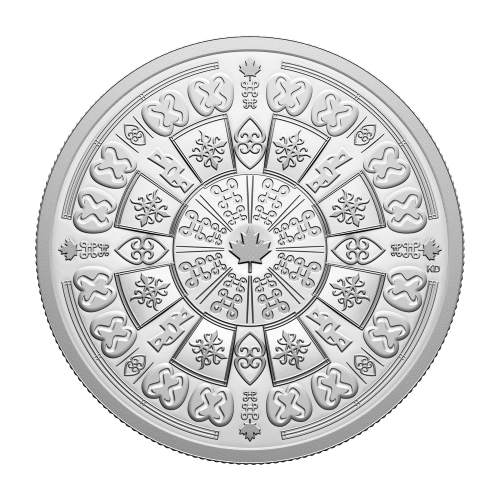
Originating from the Akan people of Ghana, Adinkra symbols hold deep meanings tied to values, proverbs, and historical wisdom. For many Black Canadians, especially those with roots in West Africa, this complex visual language serves as an anchor to a rich ancestral heritage that predates colonialism. Each symbol represents concepts such as respect (Mekyia Wo), peace (Mpatapo), and community (Nkonsonkonson)—themes that resonate strongly within Canadian Black History, where stories of migration, resistance, and cultural survival are central.
Rooted in African heritage and Black identity, the Adinkra symbols featured on the 2026 Commemorating Black History coin are not simply juxtaposed with Canadian values—they embody and affirm them, revealing a shared language of unity and human connection.
Visual language, ancestral wisdom. Celebrate Black History Month.
COIN HIGHLIGHTS
- Universal message. Crafted in 1 oz. of 99.99% pure silver, this coin brings together Adinkra symbols that honour the past, speak to shared values, and visually represent a continuing legacy of strength and community.
- Commemorating Black history. This is the eighth coin in RCM's annual Commemorating Black History series, which honours the enormous contributions Black Canadians have made—and continue to make—to Canada’s story.
- Learn about the symbols and meanings. Includes a special card that explains the meaning of each Adinkra symbol on your coin’s reverse. This marks the first time Adinkra symbols have been featured on one of Royal Canadian Mint's coins.
- Low mintage. Just 5,000 coins are available to collectors worldwide.
- Includes serialized certificate. The Royal Canadian Mint certifies all of its collector coins.
- No GST/HST.
PACKAGING
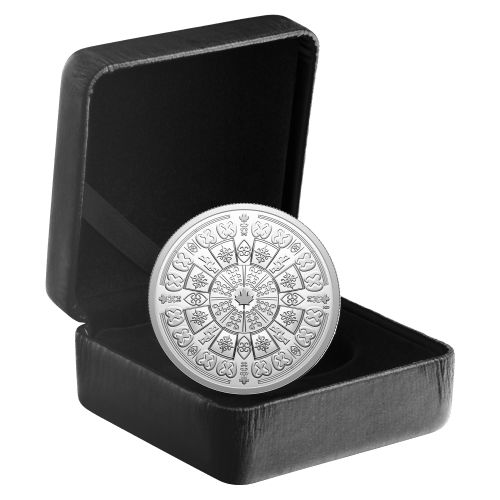
Your coin is encapsulated and presented in a black Royal Canadian Mint-branded clamshell with a black beauty box.
SYMBOLS SPEAK
Through Adinkra symbols drawn from African heritage and Black identity, the 2026 Commemorating Black History coin reflects a vision of Canadian identity grounded in unity, reconciliation, and shared humanity.
MAPLE LEAF PATTERN
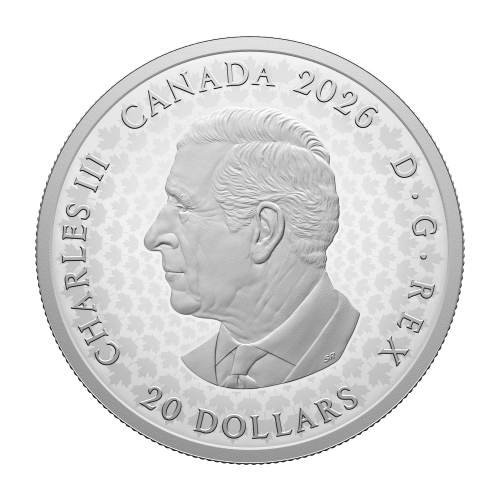
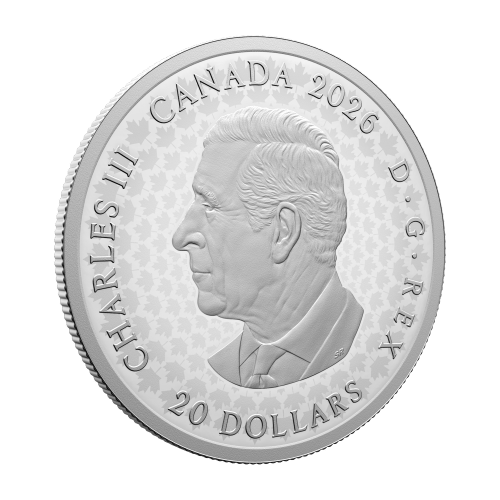
As with previous Commemorating Black History coins, the 2026 edition features a maple leaf pattern on its obverse.
DID YOU KNOW?
The word Adinkra can carry different meanings depending on the context, but in the Twi language of the Asante people of Ghana, it means “farewell” or “goodbye.” Adinkra is also the name of a traditional cloth, originally worn at funerals to honour the passing of a loved one into the afterlife. Over time, Adinkra symbols—once stamped mainly on cloth—have found their way into architecture, ceramics, jewellery, and more. Their meanings continue to grow and adapt as artists and communities around the world reinterpret them in new ways.
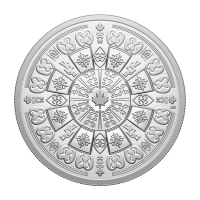
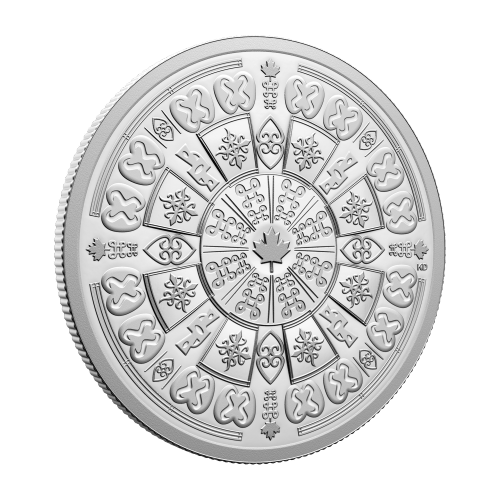
The reverse design by Canadian artist Kwame Delfish features three concentric rings of traditional Adinkra motifs encircling a central maple leaf representing Canada. The innermost ring consists of a repeating vertical pairing of two Mpatapo symbols, the peace knot of reconciliation. A second ring features a repeating sequence of four Adinkra symbols (clockwise from top): the Asase ye Duru (“the Earth has weight”) symbol representing the divinity of Mother Earth, the Funtunfunefu Denkyemfunefu (“Siamese crocodiles”) symbol of unity in diversity, and the Mekyia Wo (“I salute you”) symbol of respect and greeting, followed again by Funtunfunefu Denkyemfunefu. The outermost ring is anchored at the cardinal points by the maple leaf atop two Mpatapo symbols, echoing the innermost layer, while each quadrant displays the Asase ye Duru symbol flanked by two Nkonsonkonson (“chain link”) symbols representing unity and human relations, creating a sense of community and connectedness. The obverse features a maple leaf pattern and the effigy of His Majesty King Charles III by Canadian artist Steven Rosati.
ABOUT THE ROYAL CANADIAN MINT
The Royal Canadian Mint is known as one of the most reputable mints in the world. The Ottawa Branch of the Royal Mint opened in 1908 and was renamed The Royal Canadian Mint in 1931 when control was transferred to the Canadian government. Their high standards for excellence and quality allowed them to be the first refinery to manufacture 9999 fine gold bullion coins in 1982, as well as the first to reach 99999 fine gold purity in 1998.