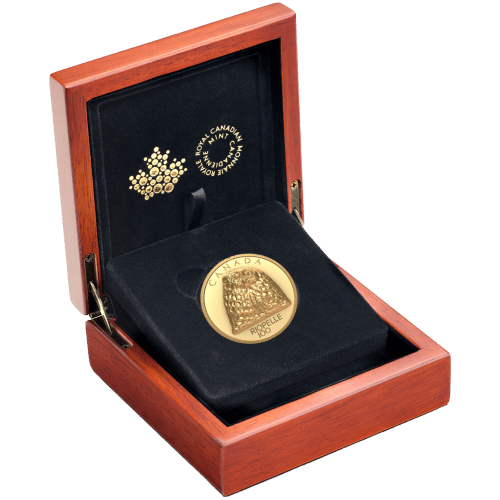
Pièce 2 onces en or Jean-Paul Riopelle Petit Hibou 2023 | Monnaie royale canadienne
Related products
A sculpted tribute crafted in Quebec gold.
Jean Paul Riopelle (1923-2002) drew wide acclaim for the abstract paintings that placed him at the cutting edge of several mid-20th-century modern art movements. Riopelle’s creative genius wasn’t limited to a single medium: in the 1960s, the Montréal-born artist dedicated himself to sculpture, creating works of art that underscored his connection to nature, which served as both a grounding force and muse.
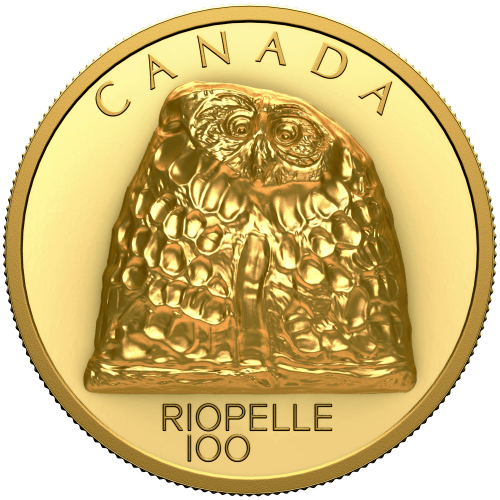
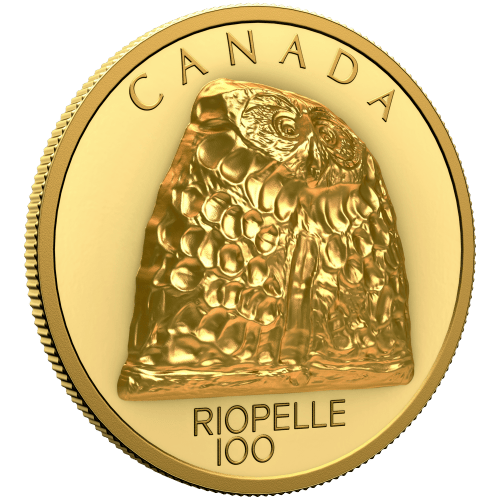
One of those bronze-cast sculptures, Riopelle’s Petit hibou, is rendered in Extraordinarily High Relief (EHR) on this coin crafted in gold sourced exclusively from Quebec mines. On the coin’s reverse, Riopelle’s sculpted work reaches an incredible relief height of over 6 mm, which further accentuates all the dimpled details that are attributed to the artist’s hand and creative vision.
A work of art on a (numismatic) work of art.
COIN HIGHLIGHTS
- Painter, engraver and sculptor. Celebrate the life and legacy of Montréal-born visual artist Jean Paul Riopelle (1923-2002), one of the most globally revered Canadian artists of the 20th century.
- Quebec-sourced gold. Your limited collectible is crafted in 99.99% pure gold, which was sourced exclusively from Quebec mines, making it a fitting tribute to an artist who brought global attention to Quebec art.
- A Riopelle original that fits in the palm of your hand. This is a coin that rewards repeat viewings, and it represents a unique opportunity to add Riopelle’s art to your collection.
- A highly desirable collectible. Just 250 coins are available to collectors worldwide.
- Includes a special insert. Along with a serialized certificate of authenticity, your coin comes with a 74 mm x 74 mm card featuring an image of the sculpture and detailed information about the original artwork.
- Includes serialized certificate. The Royal Canadian Mint certifies all of its collector coins.
- No GST/HST.
PACKAGING
Accompanied by a special insert and a certificate of authenticity, your encapsulated coin is presented in a Royal Canadian Mint-branded wood case with a black beauty box.
EXTRAORDINARY HIGH RELIEF
You’ll be endlessly captivated by this EHR representation of Riopelle’s Petit hibou On the coin’s reverse, the relief soars to a height of over 6 mm — more than four times higher than an Ultra High Relief (UHR) coin of the same diameter.
PRISTINE PROOF FINISH
Polished to a mirror-like finish, the brilliant field reflects light onto the multitude of sculpted textures and raised details that cast shadows and play with light
FIELD PATTERN
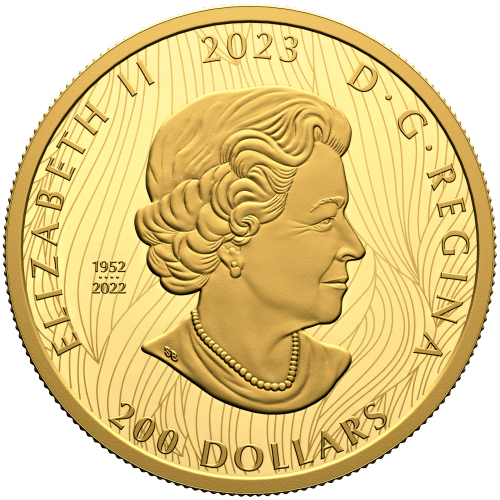
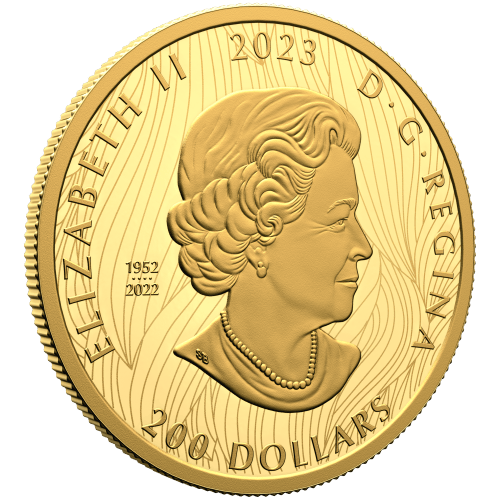
The nature theme on the coin’s reverse extends to the obverse, where the field pattern represents movement in nature.
DID YOU KNOW?
A common theme in Riopelle’s later works, owls appeared in various lithographs, paintings and sculptures. As seen on Petit hibou, Riopelle’s sculptures are often marked by finger imprints that represent the act of creation.
From the 1970s until his death in 2002, Jean Paul Riopelle lived on Saint-Antoine-de-l’Isle-aux-Grues, Quebec, where a nature reserve was created in 2007 and named after him.
Your coin’s reverse design is a representation of Petit hibou, a clay sculpture created circa 1970 by Jean Paul Riopelle. Beneath the sculpted form of an owl, which is rendered in Extraordinarily High Relief (EHR), the “Riopelle100” centenary mark (created by the Riopelle Foundation) commemorates the 100ᵗʰ anniversary of the artist’s birth (1923-2023). The obverse features a field pattern representing movement in nature behind the effigy of Queen Elizabeth II by Susanna Blunt. The obverse also bears a special marking that includes four pearls symbolizing the four effigies that have graced Canadian coins and the double date of her reign.
ABOUT THE ROYAL CANADIAN MINT
The Royal Canadian Mint is known as one of the most reputable mints in the world. The Ottawa Branch of the Royal Mint opened in 1908 and was renamed The Royal Canadian Mint in 1931 when control was transferred to the Canadian government. The Royal Canadian Mint is renowned for producing some of the highest quality and purity of gold and silver bullion coins and bars in the world. Their high standards for excellence and quality allowed them to be the first refinery to manufacture 9999 fine gold bullion coins in 1982, as well as the first to reach 99999 fine gold purity in 1998.
