Pièce 1 once d'or Les Vertus de la Reine : Victoire 2021 | Sainte-Hélène
Related products
Cette nouvelle série de produits d'investissement passionnante mettra en valeur les vertus que Sa Majesté, la reine Élisabeth II, s'est efforcée d'incarner lorsqu'elle a accédé au trône en 1952. Les vertus que la reine a incarnées ont sans aucun doute contribue à son immense succès en tant que quatrième monarque ayant régné le plus longtemps de tous les temps. Cette pièce 1 once d'or brillant pur à 9999, non-circulée, illustre cette première vertu : la Victoire. Elle constitue la première pièce d'une série de six pièces très attendue.
CARACTÉRISTIQUES DE LA PIÈCE
- Expédiée individuellement dans un emballage de protection
- Composé de 1 once d'or fin à 9999
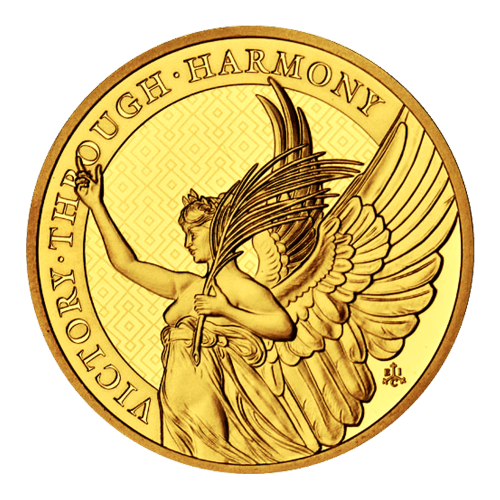
- Avers : contient une représentation de Victoria, déesse ailée, tenant la palme de la victoire dans sa main gauche et levant le bras droit. Des motifs complexes répétés ainsi que la mention « VICTORY THROUGH HARMONY » se trouvent à l'arrière-plan
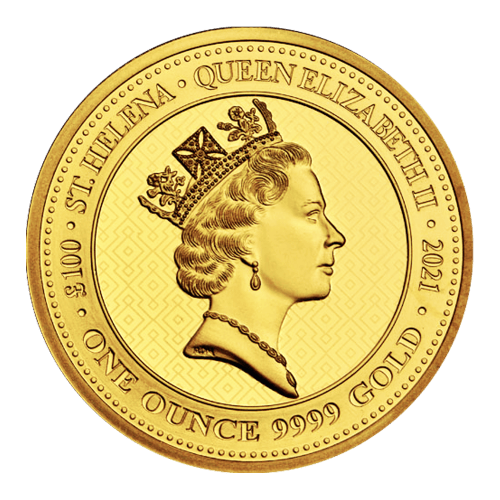
- Revers : contient la gravure d'une effigie de Sa Majesté, la reine Elizabeth II selon Raphael Maklouf, le pays d'émission, la valeur ayant cours légal ainsi que le type, le poids et la pureté du métal
Ornant le revers se trouve la déesse de la Rome ancienne, incarnation humaine de Victoire sous la forme de Victoria ailée. L'image a été rendue avec une attention aux détails extrême et un arrière-plan complexe à motif de labyrinthe. La légende, « Victory through harmony » est un rappel des idéaux de la Monarchie britannique.
L'avers présente une effigie de la reine Elizabeth II plus jeune, posée une fois de plus sur un arrière-plan au motif de labyrinthe. Le titre de la reine, en plus d'autres caractéristiques de la pièce, encapsulent l'effigie.
À PROPOS DE SAINT-HÉLÈNE
La minuscule île isolée de Saint-Hélène est un candidat peu probable pour prétendre être l'une des nations les plus influentes et les plus importantes dans le monde du commerce. Cependant, lorsque l'on regarde dans le passé et que l'on examine l'histoire collective, Saint-Hélène s'impose sans cesse comme une pièce intégrante du commerce mondial. L'île, dont la surface ne dépasse pas les 17 kilomètres de longueur et les 10 kilomètres de largeur était vue comme une oasis par les explorateurs et les conquérants tels que les Hollandais, les Portugais et les Anglais, qui rivalisaient pour prendre le contrôle de cet important port d'escale. En 1658, les Anglais ont revendiqués l'île en y construisant une forteresse et en transformant l'endroit en plaque tournante pour les expéditions lucratives vers les Indes, la Chine et le reste du monde à l'est. La société atteindra un succès sans précédent, constituant la moitié du commerce mondial. Établissant un monopole sur le coton, la soie, le sel, les épices et le thé, parmi tant d'autres, elle contribua à la vaste et immense fortune de l'Empire britannique. L'île, qui reste une colonie britannique à ce jour, joua un rôle vital dans l'ascension de l'Empire britannique.
